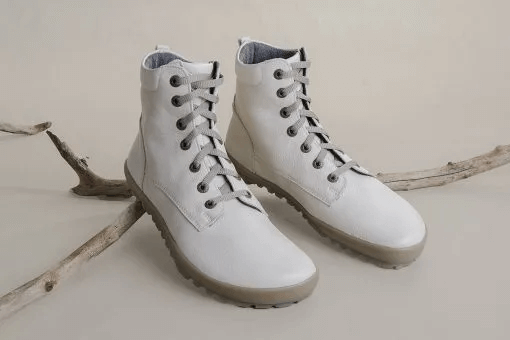
We’ve noticed a growing interest in barefoot footwear, and the market is expanding. In many ways, it’s good that affordable barefoot shoes are available, as it allows more people to buy them and experience the benefits of spacious footwear with thin soles.
Today, let’s talk about the materials used to make the shoes we wear every day. There’s a wide range of materials on the market, from sustainable and natural to synthetic and technical. We want to highlight the advantages of materials made in the EU and the premium natural materials we choose without compromise for Proalp footwear. Standards in the EU are stricter than in many countries outside the EU. These standards concern:
- Environmental protection; the REACH regulation governs the use of chemicals, including those used in leather processing (e.g., Chromium VI, formaldehyde, dyes). In the EU, we have Waste and Emissions Directives that regulate treatment plants, waste management, and emissions into the air and water.
- Health and consumer protection. The EU prohibits or restricts many substances still used in many places outside the EU: Chromium VI, heavy metals, and dyes in leather that are carcinogenic.
- The EU also has stricter regulations governing workers’ working conditions.
For Proalp footwear, we source materials in Slovenia and Italy, which is known for sustainable, high-quality leather production with a strong emphasis on green practices and manual processing—including Arzignano, where we source leather for Proalp shoes.
At Proalp, we use natural materials: smooth and brushed leather, natural sheep’s wool, and to a lesser extent, canvas, linen, burlap, and corn fibers. The advantage of natural materials is that they allow our skin to breathe. They wick moisture away from the shoe, preventing fungi and unpleasant odors.
They mold to the foot and are flexible and durable. They regulate temperature excellently, preventing overheating and overcooling. In short, they provide a great climate for our feet.
We won’t deny that we can only offer such shoes to our customers in a higher price range—much higher than footwear made from synthetic materials in Asian countries. Asian countries excel in mass production with low costs, but often with environmental and ethical compromises.
When we choose barefoot footwear as users, we do so to do something for our health and for a good, natural feeling while walking. We believe that any barefoot footwear is a step in the right direction. Today, however, we want you to think primarily about the materials your shoes are made of.
We believe that barefoot footwear made from high-quality natural materials from the EU offers great added value that is worth investing in.
A few points to consider in this regard:
- BAREFOOT FOOTWEAR SHOULD BREATHE JUST LIKE OUR FEET DO
Natural leather from the EU is breathable, flexible, and adapts to the shape of the foot over time.
Polyurethane, polyester, and other synthetic materials are non-breathable, causing sweating, unpleasant odors, and skin irritation.
As EU manufacturers, we can clearly state where the materials come from and how they are processed.
With mass production from Asia, traceability is practically impossible.
- BUY LESS AND WEAR LONGER
Higher-quality natural materials last for many seasons and can even be restored, while cheap synthetic materials crack, adhesives fail, and plastics peel.
And it’s worth noting that better materials mean less waste and fewer new purchases.