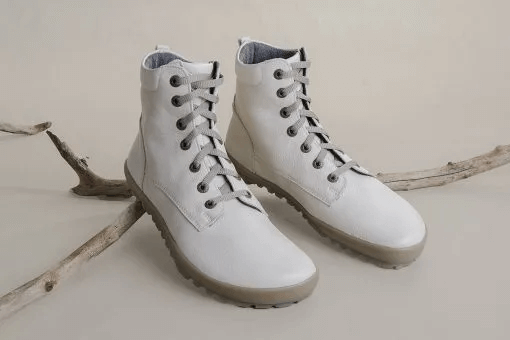
But first, let’s answer the question: “Why barefoot shoes at all?”
Because they are the most effective at preserving the natural functions of the feet: they have a thin, flexible sole and plenty of room for the toes in the front.
Anyone looking for such footwear has plenty of options today, but we invite you to visit us at Proalp, as healthy footwear is very important to us. We draw on years of study and testing to develop and manufacture Proalp footwear, and we also value what you, our users, share with us. In many parts of the world, there is a strong movement within the medical profession toward minimalist footwear, which is also a source of knowledge for us.
What is the recommended transition to barefoot footwear? In short: gradualness, observation, and patience! Since we discover along the way that it is also liberating and invigorating, it’s not even that hard to stick with it.
1. START GRADUALLY
Barefoot shoes ensure that your foot takes on a different position than in conventional shoes, and of course, the way you walk changes as well. This requires different work from the feet and lower body, which can initially be accompanied by an unusual sensation, or perhaps even pain and fatigue. Young people will likely experience this transition only in a positive sense; as a freer and more mindful way of walking. Since the impact of improper footwear increases with age, changing footwear in later years can be less straightforward.
Long-term wear of shoes with heels (of any kind) shortens and contracts the Achilles tendon; wearing shoes without heels will gradually lengthen it again, but this takes patience and time. Tension and pain may occur, so a slow and patient change is truly necessary—and it’s worth it, as the result is a healthier foot and a better walking experience.
Start mindfully and perhaps for only one hour a day. Observe yourself and increase the time as you notice your feet and toes becoming stronger. Take a break in between if needed, as adaptation takes time.
An excellent way to gradually build up your foot fitness is to wear shoes with a relatively thin sole (1 – 1.5 cm) and a heel that is as level with the ground as the toe area. The front of the shoes should be wider than what you are used to wearing. This will activate the natural functions of the feet to a greater extent—and then it’s time for barefoot shoes.
2. FOOTWEAR SUITABLE FOR THE TRANSITION
The human sole is extremely sensitive; it senses the ground surface and creates micro-adjustments while walking. After a lifetime of using shoes with thick soles, our soles no longer possess all their innate characteristics, and barefoot shoes might not feel comfortable for everyone at first.
How quickly you get used to wearing barefoot shoes depends largely on what kind of footwear you are used to. Some types of shoes are closer to barefoot than others, possessing some but not all the characteristics of barefoot footwear. Three criteria are important: sole thickness and flexibility, toe room, and heel height. You might find that the optimal footwear for you is one that still has some cushioning in the soles, a minimally raised heel, and is visually “acceptably” wide for you in the front.
You can also find shoes in our range that have the characteristics of healthy footwear but are not barefoot—in our spacious non-barefoot footwear line.
3. BAREFOOT SHOES NEED TIME
Due to wearing improper footwear, few people feel the consequences in their youth, as the negative impact takes effect over the long term; similarly, the positive effects of wearing healthy footwear need time for the foot to strengthen and adapt. Be patient, observe your body’s response, and you will gradually notice positive changes.
4. OVERSIZED BAREFOOT SHOES FOR LONG AND COMFORTABLE WEAR
When buying their first barefoot shoes, many people make the mistake of buying shoes that fit them exactly. Even if the shoes are just as comfortable at first, most users find after a while that these shoes, which fit perfectly just months ago, are now too small. In barefoot footwear, the foot is very active. The toes move and grip the surface we walk on, which is made possible by their flexibility and the wide front part of the shoe. This also strengthens the entire foot and its muscles. Sooner or later, the foot needs more room for comfortable movement, which is why we advise our customers to buy slightly larger shoes that have at least a centimeter of space in the front.
5. OBSERVE YOURSELF
In conventional footwear, we mostly walk by striking the ground hard with our heel at the start of a step, as a thick sole with a raised heel only allows for this method. People used to wearing barefoot footwear make the first contact with the ground with the whole foot or the front part. This is a big difference in walking style that has many effects on the whole body, and it happens naturally (sometimes with a delay) when wearing footwear with a thin, flexible sole without raised heels. Initially, it is recommended that while wearing barefoot footwear, you can focus on how and where you are walking and are not stressed or too busy with other thoughts.
6. GO BAREFOOT TOO
Walking barefoot occasionally is extremely beneficial for your health. Even walking barefoot at home is worth something. If you have the chance, go barefoot on uneven surfaces in nature or just around your home. Walking barefoot will improve the condition of your soles and strengthen your foot muscles.
7. DO FOOT EXERCISES AND MASSAGE THEM
There are many foot exercises online; find the ones that suit you. Massaging with natural ointments also has a beneficial effect.
8. CUSTOM-MADE FOOTWEAR
Perhaps due to foot deformities, you need customized footwear, which we certainly have the capability and knowledge to manufacture.
- BE PATIENT AND OBSERVE YOUR BODY’S RESPONSE
- REAL CHANGES WILL COME AND ARE WORTH IT AT ANY STAGE OF LIFE
- ENJOY A FREER WAY OF WALKING
Why don't conventional shoes allow for natural walking?
Read the original article by Dr. Rossi

We move freely in comfortable footwear
Choosing footwear is an important decision from both a health and aesthetic perspective
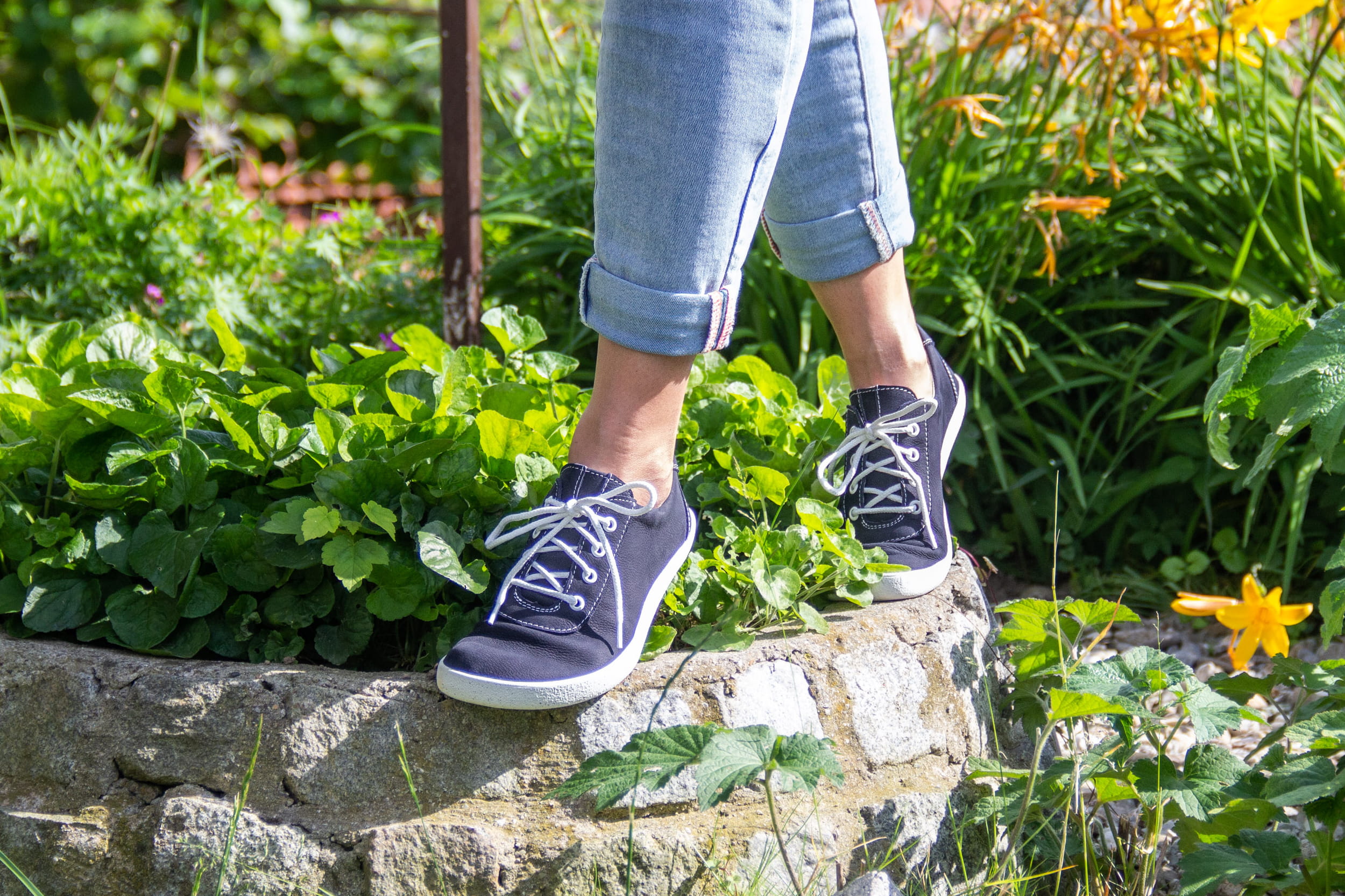
Barefoot footwear under the Proalp brand
Made in Slovenia with Slovenian expertise and local premium materials